
If you own a steel structure building or work in the metal industry, you may encounter condensation forming on metal building surfaces. Condensation on metal structure buildings causes rust on steel structures and promotes mold growth, which can damage the building's integrity. This article presents methods to prevent condensation in metal buildings.
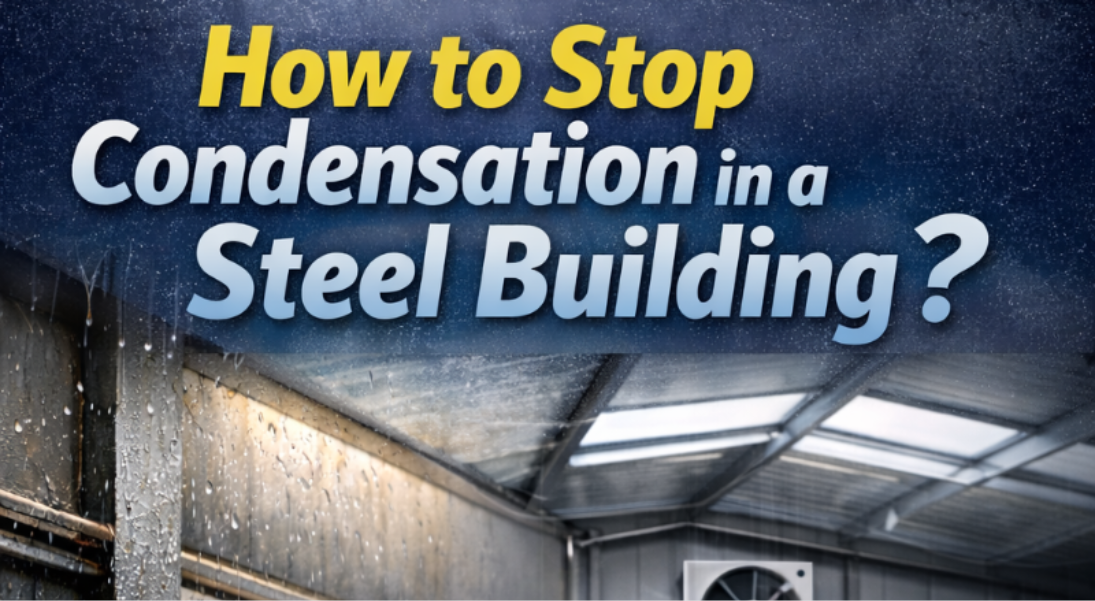
Causes of Condensation
The principle of condensation is that air holds more moisture than it can at a certain temperature.
Steel transfers heat quickly but does not hold it well, so the metal surfaces of steel-framed buildings usually stay cooler than the air inside. This makes condensation more likely to form in metal structure buildings.
Daily activities, poor ventilation, and moisture from stored materials all add water vapor to the air, increasing the risk of condensation in steel buildings.
Types of Condensation
There are two types of condensation in metal structure buildings.
Visible Condensation:
Surface Condensation
When water vapor in the air contacts metal surfaces below the dew point temperature, condensation occurs. In steel buildings, the high thermal conductivity of metal intensifies this process, causing water to accumulate at structural joints or on metal surfaces.
Nighttime Condensation
During the night, metal structure buildings rapidly lose heat, cooling below the dew point. Water vapor condenses on surfaces such as the underside of roofs, beams, columns, posts, and purlins. This is common in regions with large daily temperature swings.
High-Humidity Condensation
This often happens in facilities like food processing plants and paper mills, where indoor humidity is very high, usually over 70%. Even when indoor and outdoor temperatures are similar, metal buildings can quickly accumulate moisture.
Concealed Condensation
Insulation Layer Condensation
Occurs between insulation and steel panels or in hidden parts of metal structure buildings. Moisture penetrates the structural layer and condenses at low-temperature points, potentially causing insulation failure and corrosion of steel components.
Initial Construction Condensation
During the early operation of steel structure buildings, such as steel warehouses, moisture from construction materials increases indoor humidity. When humid air contacts cold metal surfaces, condensation forms, raising the risk of material dampness and corrosion in metal buildings.
Ways to Prevent Condensation in Metal Buildings
Understanding how condensation forms in metal structure buildings allows for targeted measures to reduce its impact.
Use Proper Insulation
Proper insulation is one of the most effective ways to prevent condensation in steel-framed buildings by reducing the temperature difference between air and metal surfaces.
Install continuous insulation on the interior of roofs and walls in metal structure buildings, covering all metal surfaces, not just the gaps between structural supports.
Suitable materials include fiberglass insulation, insulated metal panels, and reflective insulation, all of which reduce heat transfer and lower condensation risks in steel buildings.
Install a Vapor Barrier
A vapor barrier reduces humidity in metal buildings, preventing condensation caused by temperature differences. Seal all gaps around doors, windows, roof seams, and wall overlaps in metal structure buildings.
Maintain Building Ventilation
Proper ventilation in metal structure buildings keeps interior temperatures stable and moisture from building up, reducing condensation.
In high-humidity areas such as cold storage steel buildings, food processing plants, or livestock facilities, ventilation and humidity control are critical. Ridge vents and eaves allow airflow to naturally expel moisture from metal building structures.
Design the Building Smartly
Smart design reduces condensation caused by water infiltration in metal structure buildings. Roof shapes, eaves, gutters, and downspouts should limit the entry of rainwater and external moisture into metal buildings.
Prevent condensation and protect your metal structure buildings. Contact our steel building experts today to get advice or start your custom project.
